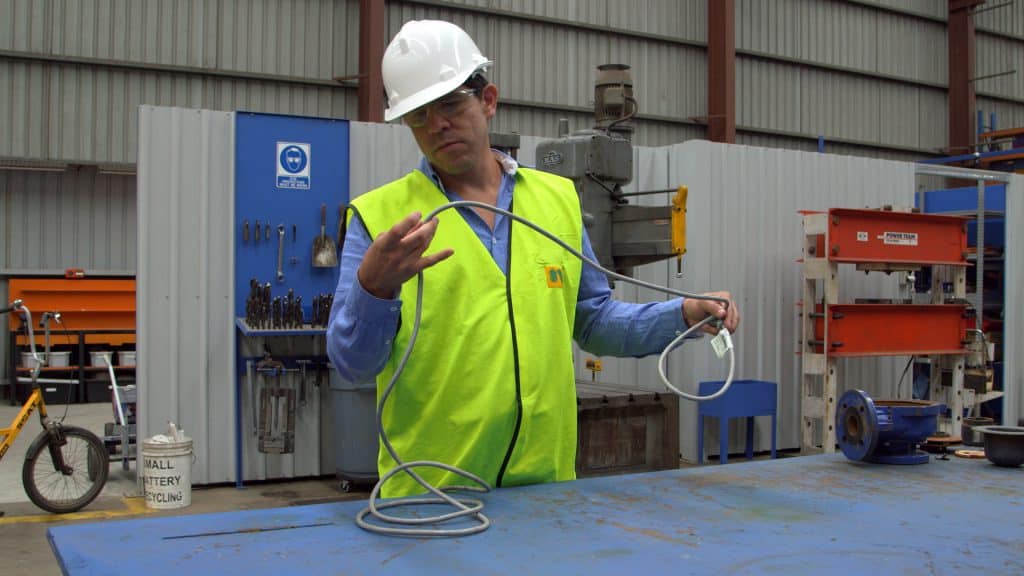
Electrical Safety
Most workplaces are surrounded electrical circuits, cables, conduits and extension cords for plant, equipment appliances and lights. This program teaches the effects of current on the human body, common hazards and electrical hazards control.
This program contains the following information:
- Basic facts – definitions and explanations of basic electrical terms.
- Basic rules – states and explains the three basic rules that apply to electricity.
- Rule #1 – Electricity will only travel in a circuit.
- Rule #2 – Electricity will always travel in the path of least resistance.
- Rule #3 – Electricity will always try to travel to the ground.
What is electrical safety?
Effects of Current on the Human Body – explains what effects different current levels will have on the body. Also explains how the resistance offered by the human body can vary under different circumstances.
Common Hazards – this section looks at the most common hazards found in the workplace, including overhead power lines and the use of extension cords.
Hazard Control – this section identifies human error as the number one cause of electrical accidents in the workplace. The section also covers the most common ‘do’s and don’ts’ that apply to electrical safety and finishes with information on the wearing of appropriate personal protective equipment.
Electricity is a convenient, cost effective and surprisingly safe source of energy in every workplace. We should however not become complacent about the potential hazards associated with electricity. Even though there are relatively few accidents associated with electricity, many of the accidents that do happen have serious or devastating results.
Running Time: 22 minutes

Safety Training Video
On-demand safety video accompanied by supplemental material to form a complete safety video training program.

Facilitator's Guide
Accompanying documentation includes facilitator's framework, video transcript, exercises and a multiple-choice assessment questionnaire.

Safety Assessment
Course includes a 10-part multiple-choice safety quiz. Participants can take the assessment as is, or the questions can be modified to suit your requirements.

Course Certificate
Participants can print a completion certificate and training progress is stored centrally in Safetyhub to track your participant engagement KPI.